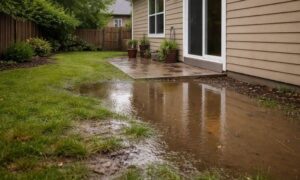
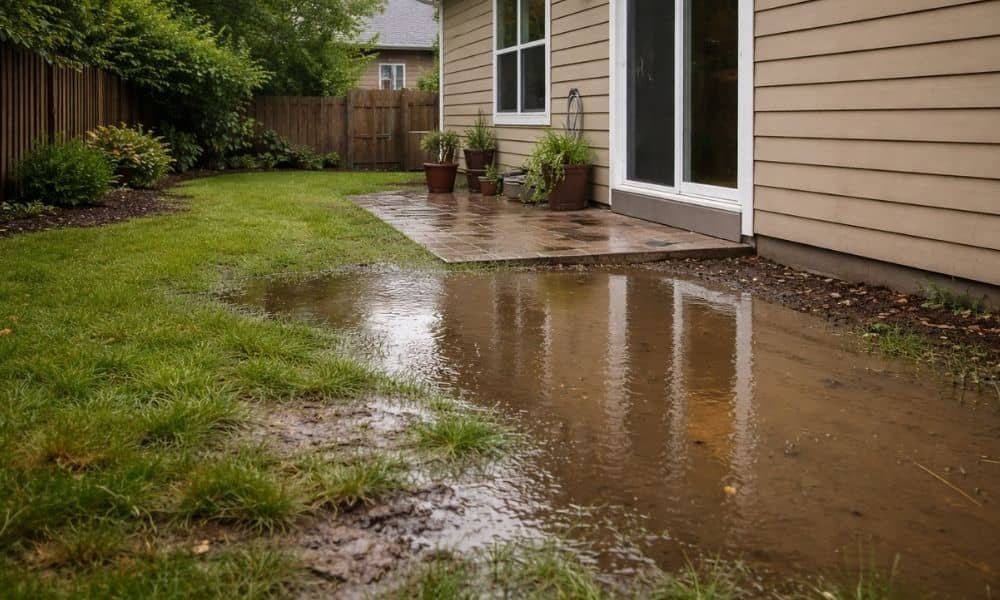
You step outside after a steady rain. At first, the yard looks fine. Then you notice water sitting near the house. It lingers longer than it should. Sometimes it even starts moving toward the garage or basement wall. You expect it to dry out. It doesn’t. This happens a lot on older Minneapolis lots. The ground can look flat, but water tells a different story. Getting a topographic survey to check drainage usually clears things up and shows why the water isn’t moving away like it should.
When Water Moves the Wrong Way
Water should move away from your home. That’s basic. Yet on many older properties, it starts moving back toward the structure.
This is called a drainage reversal.
It doesn’t take much. A small dip in the yard can change everything. A patio added years ago can shift the slope. Even normal settling over time can flip the direction of water flow.
You won’t see this just by standing in your yard. It looks level. It feels normal. But the water keeps coming back to the same spot.
That’s the clue.
Why Older Minneapolis Lots Have This Problem
Older homes were graded a long time ago. Back then, the yard worked the way it should. Water moved away, and the soil drained well.
Then things changed.
Over the years, people add features. Patios. Walkways. Driveways. Garden beds. Each change seems small, but together they shift how water moves.
On top of that, Minneapolis weather plays a role. The ground freezes, then thaws. It expands, then settles. This happens every year. Over time, it changes the surface in subtle ways.
You won’t notice a one-inch shift. Water will.
That’s why drainage issues often show up years later, even if nothing major changed recently.
What a Topographic Survey Actually Measures
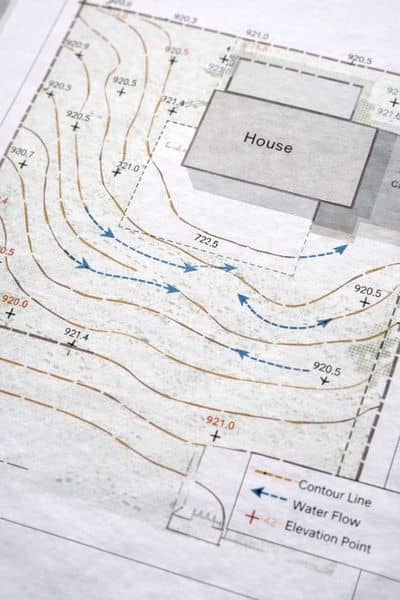
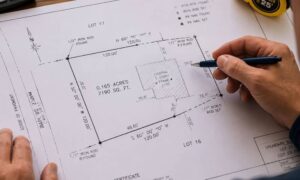
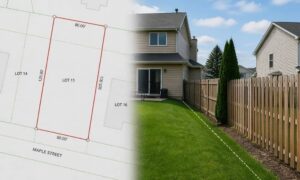
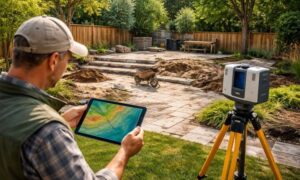
When a surveyor checks your property, they’re not just looking at the edges. They’re trying to see how the ground really sits from one area to another. That’s where a topographic survey of your yard comes in.
They take small elevation readings across different spots. Even slight height changes matter. Those points are then turned into a map with contour lines.
Once you look at that map, things start to click. You can see which areas sit lower, which ones are higher, and how the ground slopes between them. That’s what shows where water is likely to go.
Without that kind of detail, it’s easy to guess wrong. With it, you can spot low areas where water collects, higher spots that block the flow, and places where the ground slowly slopes back toward the house.
That’s usually when the drainage problem finally makes sense.
What Homeowners Usually Get Wrong
Most people trust what they see. That’s the problem.
A yard can look flat and still send water in the wrong direction. A contractor might say, “We’ll just regrade this area,” based on a quick look.
That approach fails more often than it works.
You fix one section, but the water still finds a way back. Now you’ve spent money, and the issue stays.
This happens because no one measured the full picture.
A topographic survey removes the guesswork. It shows how every part of the yard connects.
Real Situations Where This Shows Up
You don’t need a major problem for this to matter. It often starts small.
You might notice:
- Water sitting near the foundation after rain
- Muddy areas that never dry out
- Water flowing toward your patio or walkway
- Damp spots along the side of the house
It also shows up during projects.
You plan to install a new patio. You pour concrete. A few weeks later, water pools along the edge. Now the surface traps water instead of draining it.
Or you regrade part of the yard. It looks better at first. Then the next storm hits, and the same issue returns.
These problems come from one thing: the slope was never measured.
How the Survey Leads to the Right Fix
Once you have the survey, the problem becomes clear.
You can see where the slope changed. You can see how water travels across the yard. You can also spot the exact point where it turns back toward the house.
From there, the fix makes sense.
Instead of guessing, your contractor works with real numbers. They know how much soil to move. They know where to adjust the grade. They can direct water away from the structure, not just shift it around.
This saves time. It also prevents repeat work.
When You Should Get a Topographic Survey
Some signs are easy to ignore. That’s why problems stick around.
You should consider a topographic survey if:
- Water keeps pooling near your home
- Past drainage fixes didn’t work
- You plan to add or change outdoor surfaces
- Your yard feels uneven, even if it looks fine
This matters even more on older Minneapolis properties. The longer the lot has been in use, the more likely the surface has changed.
Fix the Cause, Not the Surface
Drainage problems don’t start on the surface. They start with elevation.
You can patch the problem again and again. You can move soil, add drains, or change landscaping. If you don’t understand the slope, the issue comes back.
A topographic survey shows the real cause.
Once you see how the land actually sits, you can fix it the right way. No guesswork. No repeat problems. Just a yard that drains the way it should.