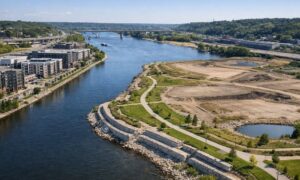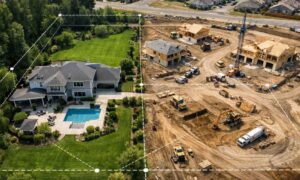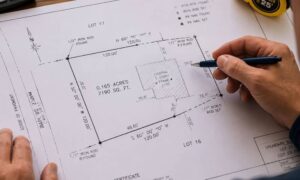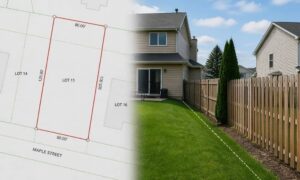
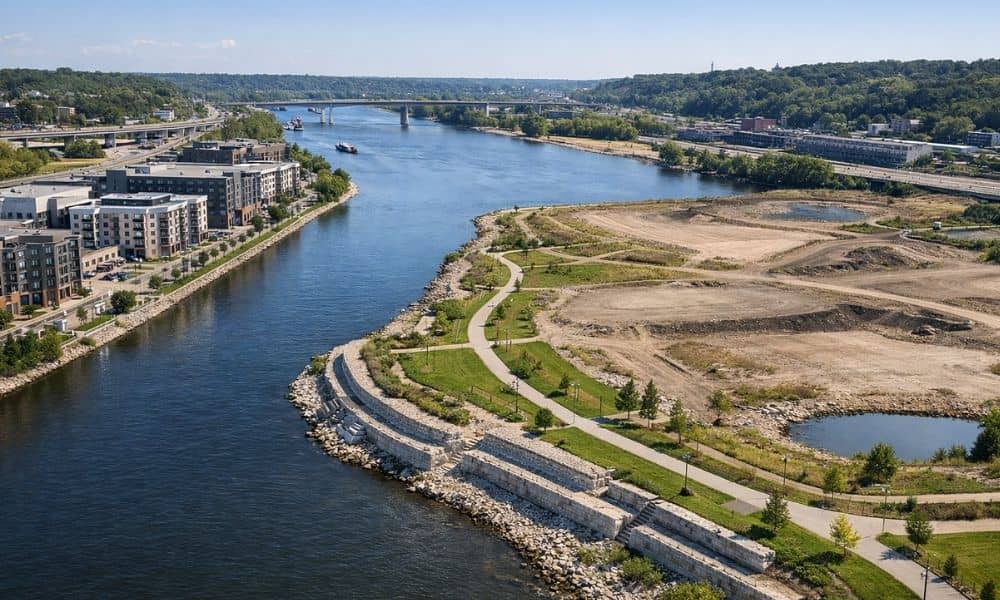
LiDAR mapping is one of the best tools for developers working along Minnesota’s rivers. It shoots laser pulses at the ground and measures the height of the land with great accuracy. This creates a detailed picture of the terrain that regular surveys and aerial photos simply cannot match. For projects along the Mississippi River, having that level of detail early saves time, money, and major headaches down the road.
How LiDAR Mapping Reveals Flood Risks on Riverfront Properties
Riverfront land looks flat. It rarely is.
LiDAR mapping picks up elevation changes as small as a few inches. That matters a lot. A two-foot difference in ground height can be the difference between a buildable site and a flood-prone one.
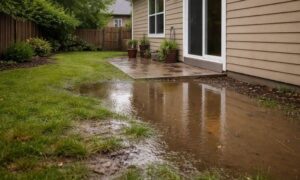
Low spots and depressions are common along the Mississippi River in Minnesota. Many of them do not show up in city records or basic surveys. LiDAR data finds them.
Developers use this data to:
- Find parcels inside FEMA flood zones
- Spot low areas that collect stormwater
- Decide where fill or raised construction is needed
- Avoid surprises during permitting and site design
Good ground data reduces risk. LiDAR mapping gives developers that foundation before planning begins.
Planning Around Existing River Infrastructure With LiDAR Mapping
Riverfront sites come with a lot of existing features. Some are on maps. Many are not.
LiDAR mapping helps teams find what is already on the ground, such as:
- Levees and flood-control berms
- Retaining walls along the shoreline
- Buried utility lines
- Active rail corridors
- City and county trails
These features affect what can be built and where. Missing one early in the project causes delays and redesigns later.
LiDAR data can find these features even when trees and brush cover them. For developers working in busy urban riverfront areas, that is a big advantage before design work starts.
Using LiDAR Mapping to Guide Shoreline Restoration and Public Access Design
Many riverfront projects in Minnesota include public space. Cities want trail systems, green buffers, and river access as part of large development deals.
LiDAR mapping supports that work.
Planners use ground models from LiDAR to:
- Map trees and plants along the shoreline
- Find spots where the bank is wearing away
- Design trails and overlooks that follow the natural slope
- Plan habitat zones without disturbing stable ground
- Find safe and practical river access points
The Mississippi River in the Twin Cities falls under the Mississippi River Critical Area program. Accurate LiDAR data helps developers show they meet slope and setback rules when applying for permits.
When public access and environmental work are part of the plan, LiDAR mapping helps teams make better choices faster.
How LiDAR Mapping Supports Brownfield Redevelopment Along the Mississippi River
Much of the land along Minnesota’s river corridors has an industrial past. Old rail yards, grain elevators, lumber sites, and warehouses left behind messy, complex properties. These brownfield sites often have uneven ground, buried structures, and old fill material.
LiDAR mapping does not detect contamination. But it shows the physical conditions that affect how cleanup and building move forward.
Key uses include:
- Finding uneven ground from years of fill
- Mapping old foundations and buried structures
- Checking slope stability near the river
- Supporting grading calculations for site prep
In Minnesota, brownfield work along the Mississippi often involves the Minnesota Pollution Control Agency, the Metropolitan Council, and local planning offices. Submitting accurate ground data early keeps the project on track.
LiDAR mapping gives development teams a clear picture of site conditions before engineers and planners come to the table.
Creating Accurate Terrain Models for Long-Term Redevelopment Planning
Riverfront redevelopment rarely happens all at once. Large sites along the Mississippi River in Minneapolis and St. Paul are often built in stages over five to fifteen years. The ground model created at the start must hold up through many design rounds, permit applications, and construction phases.
LiDAR mapping creates detailed terrain models that support:
- Drainage and stormwater design
- Engineering reports for grading and utilities
- Permit applications with the Army Corps of Engineers and DNR
- Presentations for stakeholders and city officials
- Coordination between architects, engineers, and landscape teams
One good LiDAR dataset can serve a project for years. When the site changes during construction, a new LiDAR flight captures the updated ground quickly and costs less than traditional ground surveys.
For developers managing long-term riverfront projects, that lasting value makes LiDAR mapping a smart investment from the start.
Frequently Asked Questions
1. What is LiDAR mapping used for in riverfront redevelopment?
LiDAR mapping measures ground elevation, finds flood-prone areas, locates existing features, and builds terrain models. On riverfront sites, it supports drainage design, shoreline planning, permitting, and long-term development.
2. How does LiDAR mapping help identify flood-prone areas?
LiDAR captures detailed elevation data across large areas. It finds low spots and areas that drain poorly. Developers use this data to assess flood risk before site design begins.
3. Can LiDAR mapping be used on former industrial riverfront sites?
Yes. LiDAR works well on brownfield sites. It finds uneven ground from old fill, maps buried structures, and supports grading calculations. It works even when plants or debris cover part of the site.
4. Does LiDAR mapping support environmental restoration projects?
Yes. Planners use LiDAR data to find erosion zones, map plant buffers, design habitat areas, and plan trails that follow the natural slope along the shoreline.
5. Why is accurate elevation data important for Mississippi River redevelopment?
The Mississippi River in Minnesota falls under FEMA flood zone rules, the Mississippi River Critical Area program, and DNR shoreline regulations. Accurate elevation data is required to show compliance and avoid costly redesigns.