If you are buying property near new housing construction, an ALTA title survey could be one of the most important steps you take before closing. It checks more than just your property lines. It looks for hidden problems that could affect what you can do with the land after you buy it.
This article explains what an ALTA title survey finds, why a basic boundary survey may not be enough near a new housing project, and when to order one.
What Is Happening to Minnesota’s Housing Landscape Right Now?
Minnesota needs more housing. The Twin Cities metro issued about 12,161 new housing permits in 2025, according to the Federal Reserve Bank of Minneapolis. The region needs 18,000 new units each year to keep up with demand. Because of that gap, builders are filling in empty lots and rebuilding older properties in existing neighborhoods. This kind of building is called infill development.
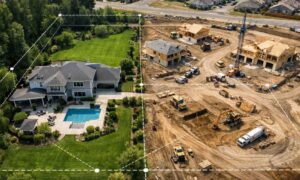
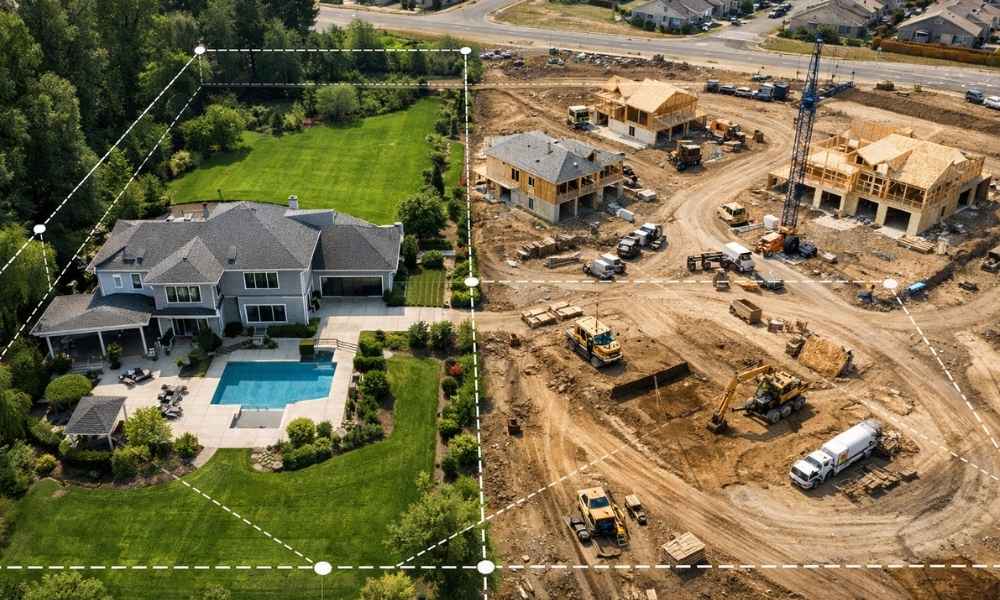
When a developer starts building next to a property you want to buy, things can change fast. New easements get recorded. Utility lines get run. Agreements get made between property owners. Some of these changes show up in public records. Some do not.
How Does New Construction Next Door Change Your Property’s Risk Profile?
When builders work next to your property, they sometimes create legal rights that stay attached to the land long after they leave. Here are the most common ones to watch for.
Temporary construction easements that are never removed. A developer might record a short-term easement to get access to your lot during building. If that easement is never officially released, it stays on the property and passes to you when you buy.
Utility lines that cross your lot. New water, sewer, gas, or electric lines for a nearby project can cross neighboring land. If the crossing was never properly recorded, the new owner may find out only when they try to build or sell.
Stormwater agreements that limit what you can do. Infill projects often share drainage systems across lot lines. These agreements can stop you from adding structures or making changes to your yard.
A home inspector will not find any of these. A basic title search might miss them too, especially if they were recorded close to your purchase date.
What Does an ALTA Survey Catch That a Standard Boundary Survey Misses?
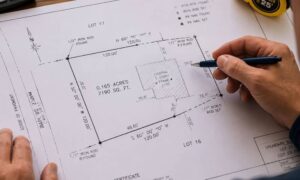
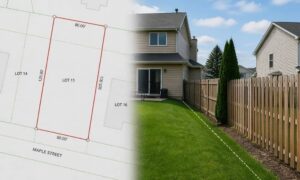
A boundary survey tells you where your property lines are. That is helpful, but it does not show you what rights other people may have inside those lines.
An ALTA title survey goes further. It maps your boundaries, easements, utility crossings, access points, setbacks, and zoning details, all in one certified document. The American Land Title Association reports that about 25% of all real estate deals run into title problems before closing. Near active construction, that number can be even higher.
The updated 2026 ALTA standards, which took effect on February 23, 2026, added something new for buyers. The revised rules introduced Table A Item 20, which requires surveyors to list potential encroachments when a buyer requests it. An encroachment is when something, like a fence or structure, crosses a property line where it should not be. This is the first time this kind of checklist has been included in the official ALTA standards.
How Do Zoning Changes Near New Projects Create Hidden Risk?
When a city changes zoning rules for a nearby property, those changes can affect your lot too. For example, if the city allows higher-density buildings in your area, setback distances and permitted uses may shift for the whole corridor. Setbacks are the rules that say how far a building must sit from a property line.
Minneapolis has been updating its zoning rules along transit corridors to allow more density. If you are buying near one of those areas, the rules that apply to your lot may have changed recently without you knowing. An ALTA survey can include zoning classification documentation as an optional item. This gives you a certified record of what the zoning looks like on the exact day the survey is completed.
When Should You Order an ALTA Survey Near a New Housing Project?
Order it as early as possible. Once you sign a purchase agreement, your due diligence period starts. An ALTA survey typically takes two to four weeks.
If you wait until the week before closing and the survey turns up a problem, you may not have enough time to deal with it. A problem could mean negotiating a lower price, asking the seller to clear up the issue, or deciding not to buy at all. You need time to make those choices. Ordering the survey in the first week of your due diligence period gives you that time.