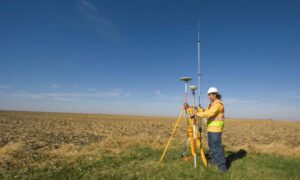

When you’re closing on a property, one document matters more than most — the ALTA survey. Lenders, title companies, and buyers rely on it to see where boundaries, easements, and improvements actually sit on the land. A clean and accurate ALTA survey protects everyone involved. But one small mistake can slow down your closing or even make the title company reject your file.
If you’re a developer, lender, or property owner planning to buy or refinance in the Twin Cities, it helps to understand how to get an ALTA survey right the first time. Here are five common errors to avoid so your title submission goes through without delay.
1. Using Outdated or Incomplete Records
The biggest mistake is using old or missing information. Minneapolis has complex property lines, especially in older neighborhoods where plats changed over the years. Some surveys still rely on legal descriptions that are ten years out of date or based on plats that were never updated after a subdivision.
Even a few feet of error can cause major trouble. Before fieldwork starts, ask your surveyor to check the legal description with the Hennepin County Recorder’s Office and review the Surveyed Properties Map for updates.
Working from the latest records keeps your ALTA survey accurate and saves you from costly corrections later.
2. Missing or Wrong Table A Items
An ALTA survey is more than a boundary drawing. It follows national standards set by the American Land Title Association (ALTA) and the National Society of Professional Surveyors (NSPS). Each survey includes “Table A” optional items — details like building heights, flood zones, or underground utilities.
Many surveys fail because the Table A items don’t match what the lender or title company expects. For example, the lender may ask for Items 2, 4, 7A, 8, and 9, but the surveyor only includes 1 through 3. When that happens, the title company can’t finish the insurance until it’s fixed.
The solution is simple: talk early. Before the survey starts, review the title commitment and confirm which Table A items are needed. A short conversation can save weeks of delay.
3. Ignoring Local Benchmarks and Coordinate Control
Minneapolis keeps an official set of control points and coordinate systems through the Public Works Survey Section. These benchmarks make sure every survey lines up with city records. If your ALTA survey doesn’t use those points, its coordinates might not match nearby parcels or city maps.
A good surveyor always ties the work to local benchmarks, checks elevations with city control data, and records it clearly in the report. That step helps engineers, planners, and title reviewers trust your results — and prevents small differences from turning into big questions later.
4. Skipping Easement Checks and Field Verification
Another reason ALTA surveys get rejected is missing or unclear easement data. Title records might show a utility easement on the north side of a lot, but if the survey doesn’t confirm it in the field, reviewers will flag it.
Older areas of Minneapolis — like Northeast, Phillips, or Uptown — often hide private drains or old utility lines that never made it into the official plats. A surveyor who skips on-site checks could miss them.
Every recorded easement should either be:
- Mapped and labeled if visible in the field, or
- Marked “not observed” if no sign appears on-site.
That small note satisfies title reviewers and protects you from disputes. It also shows your survey reflects both paper records and what’s actually on the ground.
5. Leaving Out Certification or Documentation

Even the best fieldwork won’t matter if the paperwork is incomplete. A finished ALTA survey must list:
- The date of fieldwork
- The ALTA/NSPS certification statement
- The surveyor’s signature and seal
- References to all data sources used
If any of these are missing, the title company may question the survey’s validity. Professional surveyors treat ALTA reports as legal documents — not just drawings. Each line must stand up to review by lenders, attorneys, and city officials.
When sending digital files, include the certification text and seal. Most reviewers in Hennepin County prefer both PDF and CAD (DWG) formats so they can cross-check details quickly.
Local Insight: What Title Reviewers Look For in Minneapolis
Title reviewers here pay close attention. They compare your ALTA survey with flood maps, FEMA zones, and assessor data. If anything doesn’t line up, they’ll ask for a revision before approving insurance.
To pass the first time, keep everything consistent — coordinates, elevations, and boundary lines should agree on every page. Think of it like a building plan review: neat, complete, and perfectly matched.
Bonus Tip: Aim for a “One-Pass” Approval
Just like homeowners want a one-pass fence permit, aim for a one-pass ALTA survey — a version that clears title review right away.
To do that:
- Communicate early about Table A requirements.
- Use the latest parcel and easement records.
- Tie into city benchmarks and coordinates.
- Document every field note clearly.
This approach saves time, builds trust, and strengthens your reputation in the Twin Cities real-estate community.
Final Thoughts
An ALTA survey isn’t just another closing form. It’s the proof that everyone — buyer, lender, and title company — can trust. By avoiding these five errors, you protect property rights, prevent legal issues, and keep your closing on schedule.
If you need a local surveyor who knows ALTA standards and mapping rules, work with a licensed professional. The goal is simple: a precise, defensible ALTA survey that passes on the first try — and keeps your project moving forward without stress.