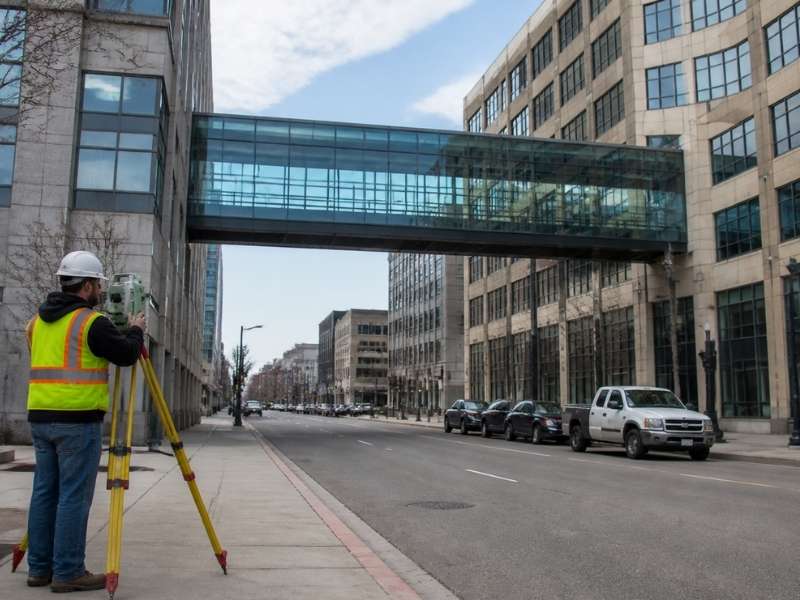
From the sidewalk, a skyway looks like a simple glass bridge. On paper, it can be one of the hardest parts of a commercial property to sort out. That walkway may cross a lot line, hang over a public street, and rest on supports owned by two different parties.
Buyers, lenders, and developers often find these issues late, sometimes days before closing. An ALTA title survey brings them into view early by tying the physical skyway to the deeds, easements, and agreements that control it. If you’re buying, financing, or redeveloping a building with a skyway, order the survey early and give your surveyor every recorded document tied to the connection.
How Skyway Rights Affect Commercial Property Boundaries
Skyway rights change where ownership and responsibility stop. Most property boundaries are drawn as lines on the ground, but a skyway adds height to the picture. The space above a lot can be owned, leased, or shared separately from the land below it.
A skyway between two buildings often sits over land owned by one party while it connects to a building owned by another. The right to occupy that airspace usually comes from a recorded easement, an air rights deed, or a permit from the city when the bridge crosses a street. Each type of document sets different limits on who can use, repair, or remove the structure.
This matters because buyers often assume the skyway comes with the building. The buyer may own only half of it, or none of it, with just a right to pass through. Those details affect value, insurance, maintenance costs, and what happens to the connection if a neighbor redevelops.
What an ALTA Title Survey Reveals About Elevated Connections
An ALTA title survey shows where a skyway sits compared to property lines, easements, and rights-of-way listed in the title commitment. It follows the ALTA/NSPS minimum standards, which lenders and title companies rely on for commercial deals. For a skyway, findings often include the following items:
- The skyway’s footprint projected onto the ground and the points where it crosses lot lines
- Clearance heights over streets, alleys, or driveways, when vertical data is part of the scope
- Support columns, footings, or brackets that sit on a neighboring parcel
- Recorded easements that match, or fail to match, the skyway’s actual location
- Encroachments where the built structure extends past the area the documents allow
That last item is where most problems show up. Many skyways were built decades before the current sale, and later renovations can shift doors, supports, or enclosure walls. A survey that compares the as-built structure to the legal description catches those gaps before a lender or title insurer does. Some details depend on which optional Table A items the client orders, so talk with your lender and surveyor about scope early.
Reviewing Air Rights, Easements, and Access Agreements Between Buildings
The survey is only as good as the documents behind it. Skyway connections usually rest on a mix of recorded and unrecorded agreements. The surveyor can only plot what appears in the title commitment or what the client provides.
Documents to Gather Before Field Work
Pull these records as soon as you can, since missing paperwork is one of the most common causes of delay. Older agreements may sit in a seller’s files rather than the public record. Ask the seller and both building owners for anything related to the skyway.
- Air rights deeds or descriptions of airspace parcels
- Cross-access and reciprocal easement agreements
- Maintenance, repair, or operating agreements
- City permits, licenses, or agreements for street crossings
- Prior surveys and as-built drawings of the skyway
What to Look for in Each Agreement
Read each agreement for its length, termination rights, and repair duties. A permit the city can revoke carries more risk than a permanent easement that runs with the land. Some agreements also set public access hours or require the skyway to stay open to pedestrians, which can shape leasing and security plans. Your attorney should review the terms, while the surveyor confirms the location matches what’s written.
Surveying Challenges When Skyways Cross Property Lines or Public Rights-of-Way
Skyways that cross public streets add another layer of review. The right-of-way below is usually controlled by a city or county, and the right to build above it typically comes through a permit or agreement with that agency. The surveyor has to show right-of-way limits accurately and note exactly where the skyway sits within them.
Field work brings its own hurdles. Surveyors may need to measure from inside both buildings, coordinate access with two owners, and work around busy foot traffic. Clearance measurements over a street may need careful timing or traffic control, and winter weather can slow outdoor work.
Old records make the job harder too. Airspace descriptions sometimes use elevations tied to outdated reference systems or vague starting points. A careful surveyor reconciles those records with current measurements and flags conflicts instead of forcing numbers to fit. Requirements can vary by municipality, lender, title company, and project scope, so confirm what your deal needs before field work starts.
How ALTA Survey Findings Support Due Diligence and Redevelopment Planning
Survey findings give everyone at the table the same picture. Title companies use them to decide which exceptions to remove or keep. Lenders use them to confirm the property matches the loan documents.
The stakes rise with redevelopment. Removing, rebuilding, or extending a skyway can require consent from the connected owner and approval from whoever controls the street below. A survey that maps every support, easement, and clearance helps architects and engineers plan without surprises. It also gives the owner a clear record to work from if the neighbor plans changes of their own.
Timing matters more than most buyers expect. ALTA surveys on complex urban sites take longer when two buildings and a public street are involved. Order the survey as soon as the purchase agreement is signed, and send the title commitment to your surveyor right away.
Frequently Asked Questions
Does every building with a skyway need an ALTA title survey?
Not always, but most commercial sales and loans involving skyway-connected buildings will call for one. Lenders and title insurers usually want it before they’ll issue extended coverage. Even when it isn’t required, the survey clears up who owns and maintains the connection. Confirm the requirement with your lender and title company early in the deal.
Who owns a skyway between two buildings?
Ownership depends on the recorded documents for each property. Some skyways are split at the property line, while others belong to one owner with an easement over the neighbor’s land. Street crossings usually involve a permit or agreement with the city as well. An attorney should interpret the deeds and agreements, and the survey shows how they apply on the ground.
Can an ALTA survey measure how high a skyway sits above the street?
Yes, when vertical data is part of the survey scope. Clearance heights can be added through optional Table A items or as a separate request. That data helps when agreements or permits set minimum heights over a street or driveway. Ask your surveyor to include it if your lender, title company, or design team needs those numbers.
How long does an ALTA survey take for a skyway property?
Timing varies with site size, record availability, and access to both buildings. Simple sites may move quickly, while complex downtown parcels often take several weeks or more. Delays usually come from missing documents or trouble scheduling access with a second owner. Ordering early protects your closing date and leaves time to resolve any issues the survey finds.
What happens if the survey shows the skyway outside its easement?
The surveyor will show the encroachment on the map and describe it in the notes. The title company may list it as an exception, and the lender may ask for a fix before closing. Common fixes include amending the easement, signing a new agreement, or getting an updated permit. Your attorney and title company can help you choose the right path for your deal.